



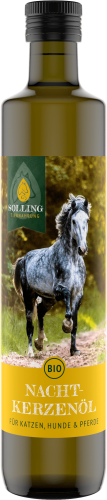
ORGANIC Evening primrose oil for animals

EU/non-EU agriculture
- Organic evening primrose oil for dogs, cats and horses
- free from additives
- for a shiny coat
- for eczema and inflammation
- strengthens the immune system
- produced in Germany
from 67 ratings


Our organic evening primrose oil comes from gentle cold pressing. The oil from evening primrose seeds is an ideal feed supplement for dogs, cats and horses.
Evening primrose oil contains valuable, unsaturated fatty acids. It can have a positive effect on metabolic processes and the appearance of the skin and coat in the event of nutritional deficiencies. In the case of skin irritation or eczema, the oil can also be applied directly to the affected skin area.
Organic evening primrose oil as a healthy feed supplement
Evening primrose oil has also been known as an edible oil for humans for a long time. It is used to prepare salads, muesli and yoghurt, in dips and for skin care. Evening primrose oil is also a high-quality feed supplement for your dog, cat or horse. This cold pressing at temperatures below 40 °C preserves the valuable ingredients in their best form. The native evening primrose oil is free from additives and contains valuable unsaturated fatty acids.
The essential fatty acids in evening primrose oil can have a positive effect on dogs, cats and horses suffering from feed-related deficiencies.
- metabolic processes,
- the coat change,
- a shiny coat,
- skin health
- the alleviation of eczema and itching
- and the immune system
and the immune system.
Evening primrose oil for dogs

A balanced diet not only plays an important role for humans, but also for dogs. Oils such as hemp oil, evening primrose oil, black cumin oil and linseed oil can serve as a healthy supplement for dogs.
From puppyhood to old age, evening primrose oil can support your dog's vitality. A puppy can be given around 1 ml per kg of body weight of evening primrose oil mixed in with its food, as the unsaturated fatty acids in evening primrose oil can have a positive effect on the development of a young dog's immune system. Adult dogs under 5 kg body weight are given around 5 ml per day. Larger dogs, from 5 kg, can be given 10 ml of evening primrose oil. You can use a teaspoon as a measure for dosing; a full teaspoon corresponds to about 5 ml of evening primrose oil.
Evening primrose oil for barfing
The term "BARF" or Barfen stands for "bones and raw food". Barfen is a type of feeding for carnivorous animals. It refers to the raw feeding of carnivorous animals such as dogs and cats. The most important ingredients when barfing dogs are meat, bones and offal. Small amounts of fruit and vegetables are also fed. As with eating in the wild, all ingredients are fed raw. Raw feeding increases the dog's or cat's intake of omega-6 fatty acids, so omega-3 fatty acids in particular should be supplemented.
However, evening primrose oil can be fed to dogs and cats of all breeds and sizes as a healthy supplement, not only when barfing, but also when feeding suitable dry and wet food.
Evening primrose oil for cats
Evening primrose oil is also suitable for cats as an addition to their food. Your velvet paw will benefit from the polyunsaturated fatty acids. The skin, coat and immune system can be supported by regular feeding of evening primrose oil. The annual change of coat is particularly tedious for cats with longer coats. In addition to regular brushing, the additional administration of evening primrose oil helps. Oils stimulate hair growth and can have a particularly supportive effect on dull coats and dry skin.
In nature, a cat's diet consists of small mammals such as mice, birds and insects. These prey animals also provide the cat with a small amount of vegetarian food, which is found in the stomach contents of the prey. Just like dogs, cats can also be fed an oil when barfing. The vitalizing effect of hemp oil, linseed oil or evening primrose oil is a valuable addition to barfing, dry or wet food.
From around 3 months of age, cats can be given around 1 ml of hemp oil per kg of body weight 3-4 times a week. An adult cat weighing 5 kg would therefore be given a teaspoon of hemp seed oil several times a week. Caution: Black cumin oil and black cumin pellets are poisonous for cats as, unlike horses and dogs, they cannot completely break down bitter substances.
Evening primrose oil for horses
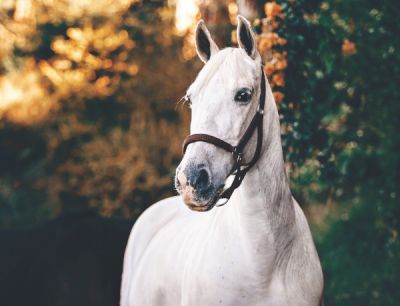
Horses with sensitive skin can benefit from being fed evening primrose oil. The skin becomes more elastic and dry patches of skin can be reduced. Feeding the valuable evening primrose oil has proven to be particularly effective in supporting the change of coat in spring or fall.
Oil is naturally high in calories and is therefore an ideal supplementary feed for horses that are heavy feeders. The essential fatty acids in evening primrose oil can have a positive effect on the horse's metabolic processes and coat change in the event of feed-related deficiencies. At the same time, regular feeding can ensure a shiny coat. In winter, evening primrose oil can help the horse to waste less of its own fat reserves and thus maintain its body temperature better. Evening primrose oil can strengthen the horse's immune system. In addition, the high mucilage content stimulates intestinal activity and can help prevent colic.
Also try our pellets, e.g. press cake made from linseed, which is produced when brown linseed is processed into linseed oil. The pellets, which we also offer in the varieties black cumin, milk thistle and night candle, are a high-quality feed for horses.
Feeding recommendation
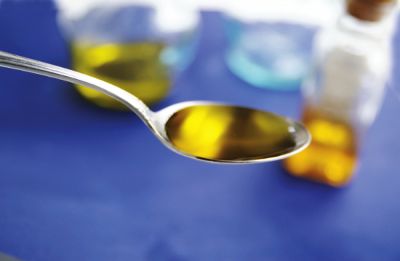
- 5 ml for dogs under 5 kg
- 10 ml for dogs over 5 kg
- 1 ml per kg body weight for cats
- 50 - 75 ml for ponies or horses, depending on size
Evening primrose oil is best accepted when it is given over the feed or mixed into the feed. Experience has shown that evening primrose oil is readily accepted by dogs and horses. Cats eat evening primrose oil best when it is mixed into their wet food. You can simply use a teaspoon as a measure for dosing. A full teaspoon corresponds to approximately 5 ml of evening primrose oil.
Always provide your pet with sufficient fresh drinking water.
Please store the organic evening primrose oil in a cool, dark place at all times.
Our evening primrose oil is an untreated natural product. A natural sediment, cloudiness and color changes are natural.
Ratings
Specification and ingredients
Evening primrose oil for animals
Average energy and nutrient content for 100 g
As a product of nature the composition of the oil can vary, the given specifications are therefore average values.
 Linseed oil for animals